
FAMILY HISTORIES · KARMUWALA
Hardit Singh Sandhu
c. 1915–1976
When Hardit Singh Sandhu died in April 1976, his death notice set one word beside his name: Karmuwala. He was born in Singapore and made his life there as a financier and a public man. At about twenty he took his father’s seat on the Sikh Advisory Board; under the Japanese he recruited for the Indian Independence League; after the war he led the Sikh Moneylenders’ Association and chaired the Advisory Board. Yet to his family he was still a man of Karmuwala, the Punjab village his father had left in the 1890s.
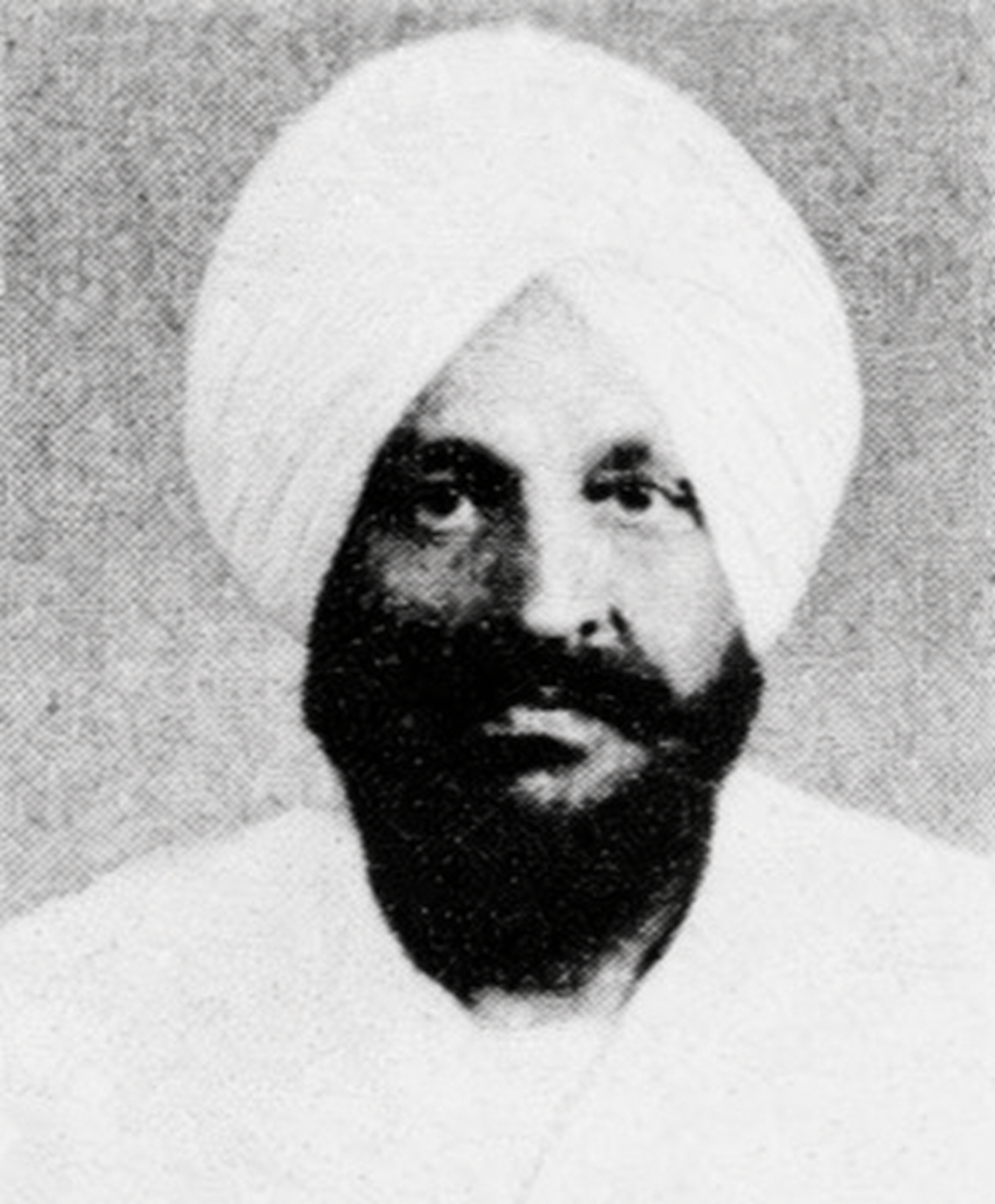
Hardit Singh Sandhu, from a small monochrome original. AI-assisted cleanup; no historical detail has been added or recovered.
His father’s seat
In a letter written in 1961, Hardit said that he had been born in Singapore forty-five years earlier, and that his father had arrived twenty years before that. Sunder Singh, also known as Racha Singh, had been in business in Singapore since 1894. He helped establish the Sikh Moneylenders’ Association and became its first president. Hardit was the elder of Sunder’s two sons; the younger, Bahal Singh, was known in the family as Bhal. 1, 2, 11, 12
In May 1936 Hardit, then about twenty, joined the Sikh Advisory Board in place of his father, who had resigned. Two years later he was elected to the committee of the Indian Association, at a meeting reported under the headline “Indians’ Leader Refutes Malicious Propaganda”. In 1940, Hardit later recalled, his father retired to India. 1, 10, 13
Bangkok, 1942
Four months after Singapore fell, Hardit was in Bangkok, a delegate from Malaya to the conference of the Indian Independence League, the Japanese-backed movement to end British rule in India. More than a hundred delegates had come from across East and Southeast Asia to plan how the movement would be organised throughout the region. Earlier that June, Hardit had been named to the League’s local working committee in Syonan, as the Japanese had renamed Singapore. 14, 15, 16, 31
Within the League, Hardit worked in recruitment and training. In July 1944 the Japanese news agency Domei quoted a Hardit Singh, in charge of the League’s Recruiting and Training Department, on ten part-time centres across Singapore where civilian volunteers trained in their spare hours under graduates of the Azad Hind School. The report gives no surname, but the role fits his. 4, 17
The moneylenders’ president
After the war, Hardit’s public life again reached beyond the Sikh community. In August 1946 he was among the hosts named for a farewell tea-party at Victoria Memorial Hall for B. Govindasamy Chettiar, a philanthropist about to visit India for the first time in twenty-five years. In 1948 he appears, as “Hardith Singh”, on the membership list of the Town Local Congress, the town branch of the Singapore Regional Indian Congress. 18, 30
By August 1949 he was president of the Sikh Moneylenders’ Association, the body his father had helped found, and he was defending it in public: with its secretary, Kartar Singh, he signed a published reply to the association’s critics. Religious life drew him in too. In February 1951 he was listed as honorary treasurer of the Central Sikh Temple. 19, 20
In March 1951 came news that Sunder had died in India, aged eighty. Twice now Hardit had taken up a role his father once held: the seat on the Advisory Board, and the presidency of the moneylenders’ association. 11
Who runs the gurdwaras?
On 6 May 1955 Hardit began a further two-year term on the Sikh Advisory Board, and by his own account he chaired it from 1955 to 1957. 1, 21
By 1961 the question was who should run the Queen Street and Silat Road gurdwaras. A bill to merge their management was before the Legislative Assembly, and in March Hardit urged its Select Committee to go ahead with the merger. Then he went further. Most of the Queen Street management committee, he argued, should be elected at the temple, with places kept for representatives of five Sikh societies. He wanted the congregation, not only the established societies, to have a say. 1
In May 1962 he was again elected chairman of the Advisory Board. He and his wife, Balbir Kaur, made their home at 116A Tessensohn Road, an address recorded in 1961 and again in his death notice. 1, 2, 22
Navigator
In October 1970, in his mid-fifties, Hardit was due to ride as navigator for a Singapore team called “Friendship”, setting out for the Asian Highway Rally. 3, 5
A year later the war was news again. In October 1971, in its coverage of the Khosla inquiry into the disappearance of Subhas Chandra Bose, The Straits Times described Hardit as a former training and recruitment officer of the Indian Independence League. 4
Hardit died on 11 April 1976, aged sixty. His death notice named Balbir, his brother Bahal and the surviving family, and set “Karmuwala” beside his name. Balbir’s own death notice appeared in September 1980. 2, 29
The house with the handpump
What did Karmuwala mean to this family? The memories of relatives and neighbours offer a glimpse. Hardit’s nephew Jaspal, Bhal’s son, remembered riding by tonga with his grandfather Sunder and grandmother Kishan Kaur to neighbouring villages and festivals. Naseeb Chand recalled visiting the family’s large house as a child, bathing at its handpump and seeing its upper rooms. Gurdayal Singh remembered the wells on Sunder’s land, which supplied water for the fields and for drinking. After many years with his maternal grandparents, Jaspal came back to Karmuwala and renovated the ancestral house. 12, 23, 24
In the same decades another Karmuwala Sandhu, Massa Singh, was guarding prisoners and internees in Singapore, and later drove a taxi: read his story.
Family tree and photographs
Explore Hardit and Balbir’s family tree, photographs and surviving documents below.
-
-
-
-
 Unknown
-
-
Unknown
-




Photographs and documents

Karmuwala Jamabandi 1962 1/3

Karmuwala Jamabandi 1962 2/3

Karmuwala Jamabandi 1962 3/3

Karmuwala Jamabandi 2008 1/2

Karmuwala Jamabandi 2008 2/2

Sunder Singh, obituary photograph
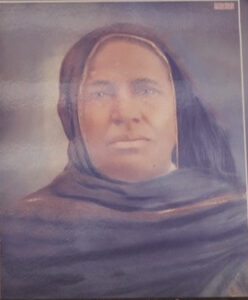
Kishan Kaur

Jamabandi 1962 – 1057
Gharka land register, 1958–59 — cultivator entry 1056
Notes on the evidence
Birth
The approximate year follows Hardit’s statement in a letter dated 8 March 1961 that he was born in Singapore forty-five years earlier, supported by age sixty in his 1976 death notice. The family identifies the letter writer as Hardit; its address provides separate support. Other reported ages differ: fifty-five in October 1970 and fifty-seven in October 1971. An Eastern Sun age of fifty-four survives only at search-result level. No birth registration or exact birthday has been established. The earlier tentative Karmuwala-birth and teenage-migration account is not adopted. 1, 2, 3, 4, 5, 15
Family background
The 1936 appointment names his father as Sundar Singh of Karmuwala; the 1951 notice gives the Sunder/Racha alias. Jaspal identifies Hardit as the elder brother of Bhal and recalls his grandfather Sunder and grandmother Kishan Kaur. Hardit’s 1961 letter leaves his father unnamed and says he arrived twenty years before Hardit’s birth. That rounded recollection does not fix an arrival date or establish that arrival and the reported 1894 business start were the same event. His father’s 1940 retirement is also retrospective testimony. The 1951 notice supplies no exact death day. 10, 11, 12, 1
Public offices
The 1936 appointment took effect on 2 May and was published on 26 June; it was to membership, not the chairmanship. The 1938 meeting date follows “last evening” in the 3 October report, whose family attribution is separate from its name-only wording. The presidency is attested by 15 August 1949, not dated to an election that day. The 1955 Gazette appoints members for two years; the 1955–1957 chairmanship comes from Hardit’s later account. The May 1962 report gives no exact election day. These records do not establish uninterrupted tenure. 10, 28, 13, 19, 21, 1, 22
Wartime identifications
The July 1944 report names Hardit Singh without the Sandhu surname or family identifiers. Its role description fits his later-documented training work, but the identification remains qualified. It establishes neither an appointment date nor an independently verified count of ten centres. None of these records establishes an INA military rank or command. 14, 16, 17, 4, 15
The Bangkok list lacks a father’s name, village or Sandhu surname and does not give individual travel dates; its two lists are not independent witnesses. The family confirmations do not cover the July 1944 official. The relevant inquiry deposition remains unread.
Other accounts
A separate wartime intelligence report about Hardat Singh and an unnamed gurdwara was assessed by the family only as “very likely” referring to Hardit. Its temple, identity and office dates remain unresolved. Court, sugar and bankruptcy namesakes have not been included as established events in his life; Sunder’s Racha alias does not itself identify those litigants. 25, 15, 11
Family memories and announcements
Jaspal recalled Sunder’s Singapore trade but did not know the goods. He said Bhal went to Malaya and that a relative later told him Bhal had died in Singapore; the date was unknown. The village accounts are recollections, not measured property inventories. The 1946 notice records a planned event and listed hosts; the 1970 rally report records a proposed journey, not its completion. 12, 23, 24, 18, 3
Household
Tessensohn Road is an address, not a stated death place or proof of ownership or continuous residence. The 1976 notice names two daughters and five sons. An earlier family account gives six children without an identified source; the discrepancy and parentage of everyone named remain unresolved. Balbir’s notice was published on 19 September 1980. The family account gives her death as 18 September, but the retained notice reading establishes identity and address, not that exact day. 2, 1, 29, 6
Sources
01 L.A. 7 of 1961, Select Committee report on Queen Street and Silat Road Sikh Gurdawaras Bill, Appendix II, Paper S.C. No. 16, B28–B29 / PDF 45–46
02 Death notice, The Straits Times, 12 April 1976, p.27
03 A. Johnson, “Friendship” team leave today for Asian rally, The Straits Times, 17 October 1970, p.29
04 “No Indo-Pakistan partition if Bose had been alive”, The Straits Times, 22 October 1971, p.7
05 Eastern Sun, 16 October 1970, p.22, “Team from Singapore enters for the 2nd Asian Highway Rally”, microfilm NL 6605
The public index identifies Hardit, 54, as navigator. The exact locator is established, but the original article remains unread/restricted. This reported age is not an exact birth date.
06 Unverified inherited family-account details: Balbir Kaur’s exact death date and the earlier count of six children.
Their underlying records or named informants have not been identified. These are retained claims, not independent corroboration of the death notice.
10 Straits Settlements Government Gazette, 26 June 1936, p. 1630, GN 1764, ref. 949/36
11 The Straits Times, 7 March 1951, p. 8, untitled Sunder Singh obituary, NL2507
12 Interview with Jaspal Singh son of Bhal Singh son of Sunder Singh
13 Morning Tribune, 3 October 1938, p. 3, Indians’ Leader Refutes Malicious Propaganda
The identification of the Hardit Singh in this report with Hardit Singh Sandhu is supplied by the family.
14 Indian Independence League Office-Bearers, Syonan newspaper, 4 June 1942, p. 2; NewspaperSG collection Syonan Shimbun, microfilm NL255
15 Family identifications supplied in October 2026.
These identify particular people in particular records; they are not additional contemporary documents.
16 NAI 253/INA, Bangkok Conference Report; Private Papers PP_000002998248; original PDF 139–140 and 146–147, especially 140 and 147
The delegate records use the spelling “Hardat Singh”; the family identifies him as Hardit Singh Sandhu.
17 Recruiting and training, July 1944: Daily Résumé No. 175 and The Syonan Shimbun
S.E.A.C. and India Command, Daily Résumé of Extracts from Broadcasts from Japanese Controlled Stations, No. 175, 4 July 1944, quoting Domei News Service, Shonan, 3 July. INA training papers, file 260, PDF p. 45, archival folio 75; National Archives of India, PP_000002998255.
“Firmly Resolved to Oust Anglo-American Foes”, The Syonan Shimbun, 4 July 1944, p. 2. This may transmit the same underlying news as the broadcast extract; the two versions should not be counted as independent witnesses.
The extract names Hardit Singh as member-in-charge of the Recruiting and Training Department and attributes to him the account of ten part-time centres and instruction by graduates of the Azad Hind School. It does not give the Sandhu surname, family identifiers or an appointment date. The separate unexplained “7.7.44” mark is not used as the report or event date.
18 “Indian Philanthropist Visiting Motherland After 25 Years”, Indian Daily Mail, 21 August 1946, p.4
19 The Straits Times, 15 August 1949, p. 4, Sikh Moneylenders Answer Their Critics, NL2497
20 The Straits Times, 13 February 1951, p. 4, Sikh Temple Officials, NL2506
21 Colony of Singapore Government Gazette, 6 May 1955, vol. X no. 62, p. 616, GN 1198
22 The Straits Times, 10 May 1962, p. 18, Sikh Board, NL12133
23 Interview with Naseeb Chand, former sarpanch
24 Interview with Gurdayal Singh, alias Bhajan Singh
25 C.S.D.I.C. (India), Red Fort, Delhi, No. 2 Section Report 398 concerning Surat Singh B245; NAI Private Papers 499 Part-1, PP_000002998619; viewer/PDF 2, section 2, list item 3; report PDF 2–4
28 Supplementary contemporary report: Malaya Tribune, 27 June 1936, p.12. The report date is distinct from the appointment's effective date of 2 May 1936.
29 Balbir Kaur notice, The Straits Times, 19 September 1980, p.31. The retained reading establishes family identity and address; no exact death date was extracted.
30 Indian Independence First Anniversary Souvenir, 15 August 1948, printed p. 62 (PDF p. 64), Town Local Congress membership list
The membership list records Hardit Singh under the spelling “Hardith Singh”. For the branch’s parent organisation: The Straits Times, 19 May 1949, identifies the Town Local Congress as a branch of the Singapore Regional Indian Congress.
31 Context: the Bangkok Conference, June 1942
Joyce C. Lebra, The Indian National Army and Japan (Singapore: ISEAS, 2008), chapter 6, “The Crisis of the First INA”, pp. 75–101. Lebra describes more than a hundred League delegates from across East and Southeast Asia assembling in Bangkok on 15 June 1942 and meeting for nine days to plan the movement’s organisation across Asia and its co-operation with Japan. This context does not establish Hardit’s individual role at the conference.