

FAMILY HISTORIES · KARMUWALA
Arjan Singh and family
Gharka, Shanghai and service at home
Born in Gharka in 1920, Arjan Singh was the son of Surain Singh and Gujar Kaur. His life took him from Punjab to Shanghai, where he served in the Azad Hind Fauj, and back to village leadership at home.
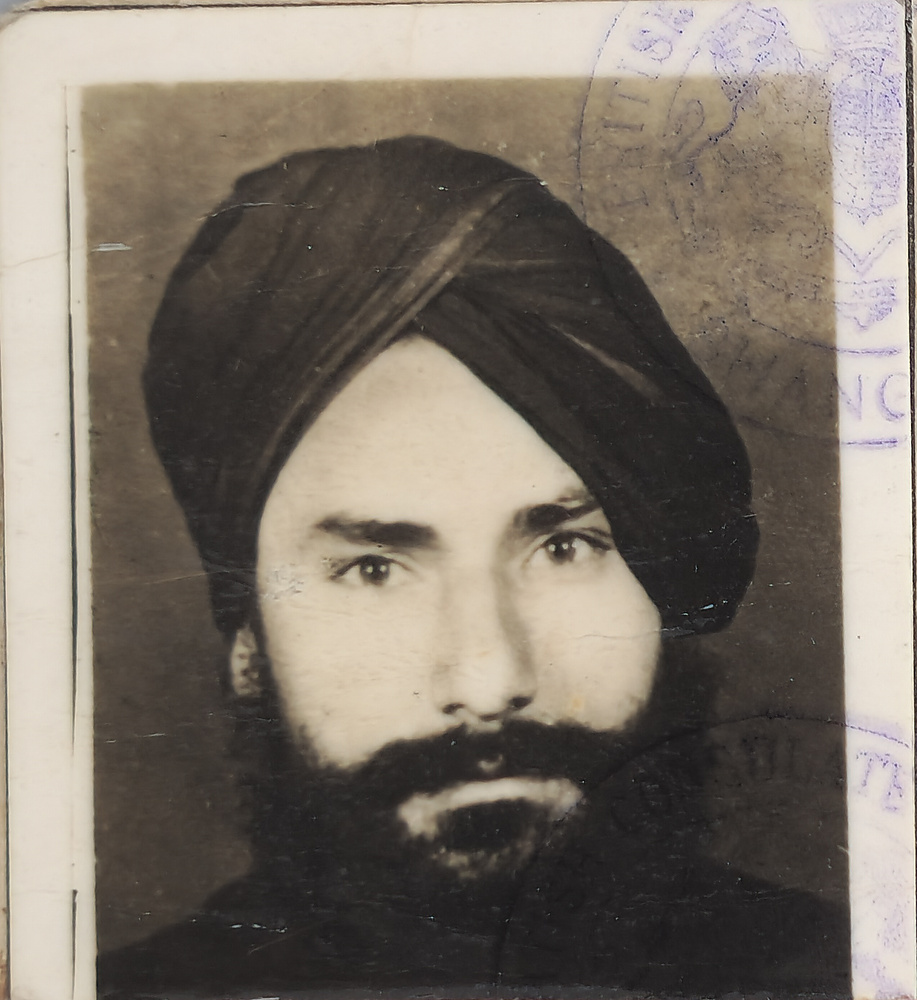
Arjan Singh, portrait attached to his 1946 Emergency Certificate.
From Gharka to Shanghai
Surain Singh was the first of the family to go to Shanghai. Other family members followed, and they established a dairy business there. Arjan received part of his education in the city. He later joined the Indian independence movement in Shanghai.
By October 1943, he was a volunteer with the Indian Independence League in Shanghai. On 29 October, its recruiting officer, Bishan Singh of Brahampura, recommended him for intelligence work, describing him as trustworthy and committed to India’s freedom.
Service in Shanghai
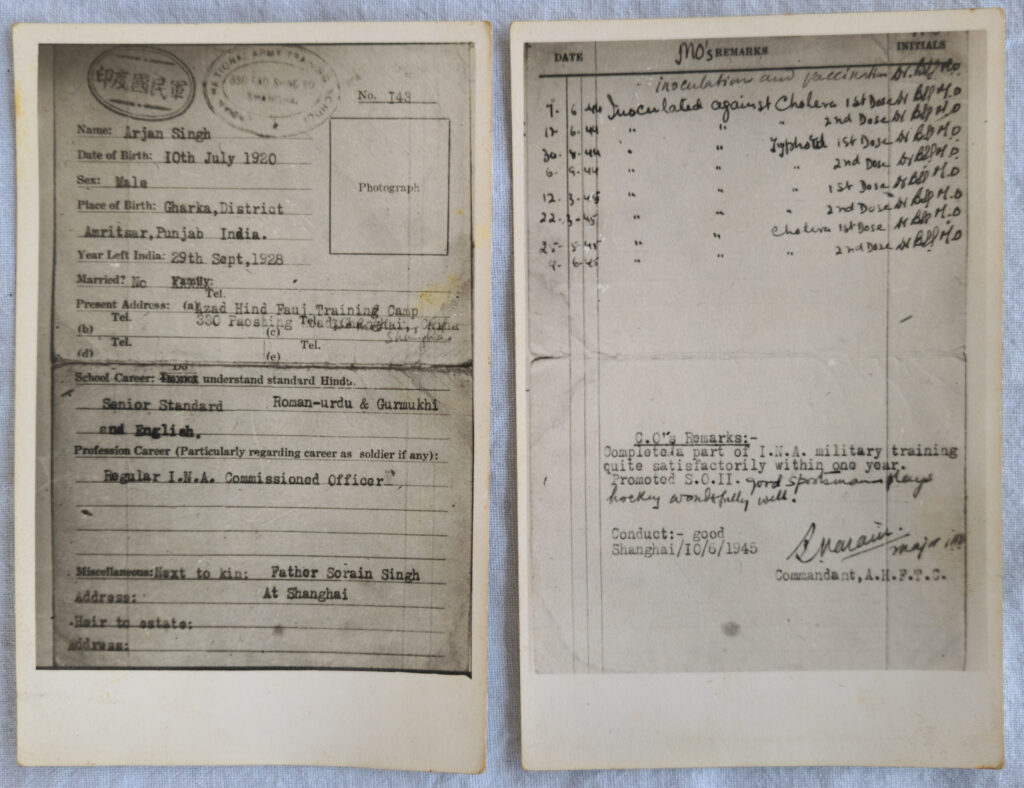
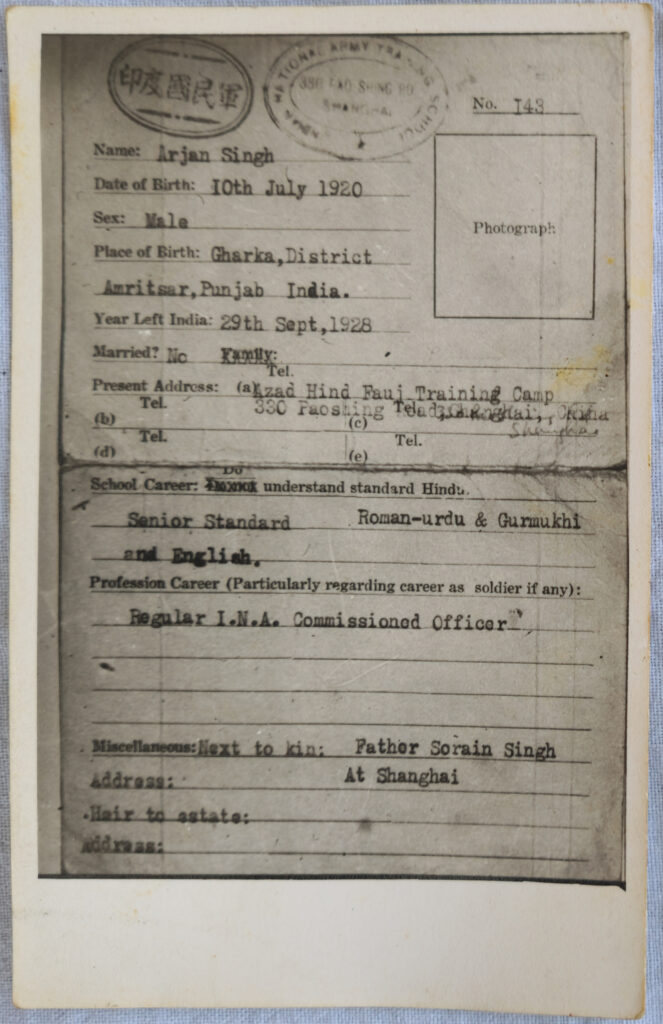
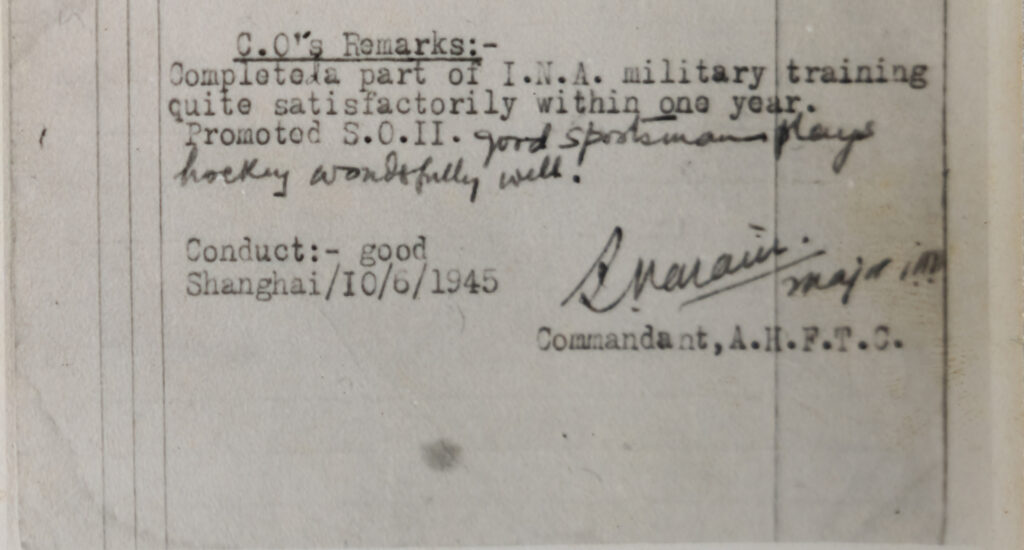
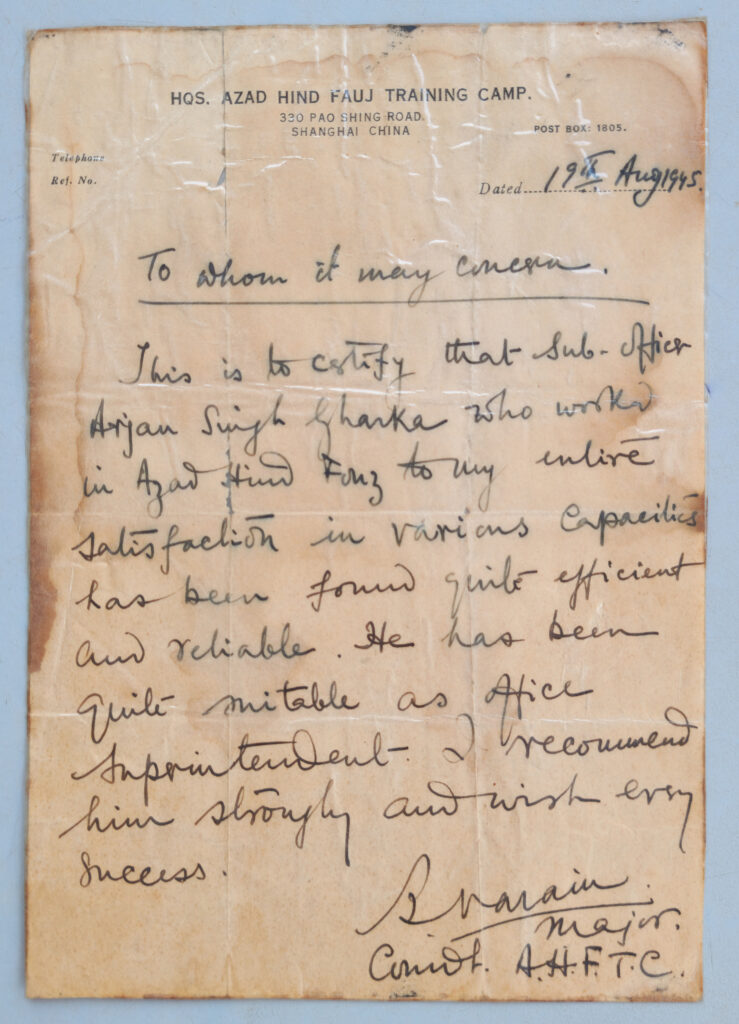
Arjan subsequently served at the Azad Hind Fauj Training Centre in Shanghai. By December 1944, he was a Havildar, with regimental number 143, and had stood first in an N.C.O. cadre test. His superiors recommended him for promotion on 15 December, praising his discipline, reliability and ability in office work. By 10 June 1945, he had been promoted to S.O.II. A further testimonial that August addressed him as Sub-Officer Arjan Singh Gharka and commended the efficiency with which he had served in various capacities. He underwent a year of INA training and served until the organisation’s fall.
Return to Punjab
He remained in Shanghai into 1946, receiving an identity certificate there on 18 July. His journey back to India included passage through Singapore, where he received permission to go ashore during his ship’s stay. An arrival check at Calcutta on 3 January 1947 places him back in India before independence. His subsequent life brought him home to Punjab.
Village service
In 1952, Arjan became sarpanch. He used public grants for village development and dealt impartially with land disputes. During land consolidation, when the expected boundary stones did not reach Gharka, he paid for cement-and-gravel replacements and had them installed. People sought his help with measurements and boundaries, trusting his judgment. He was remembered for refusing even a cup of tea while undertaking such work.
On 26 January 1962, a certificate presented on behalf of the Punjab Government recognized his service in the freedom struggle against British rule.
Family and remembrance
His family responsibilities also formed an important part of his life. After his brother Sucha Singh died, Arjan married Sucha’s widow, Balwant Kaur, and raised his brother’s son as his own. The family remembers him both for that care and for the fairness he brought to public life. In Gharka and Karmuwala, his story joins the experience of Indians overseas with the practical work of serving a village at home.
Family tree
Explore the family of Surain Singh and Gujar Kaur, including Arjan and his brothers Tara, Sucha and Jarnail. Select a name for its source notes.
Raghbir’s family connection. Family recollection identifies Raghuveer Singh as Sucha Singh’s son, raised by Arjan Singh as his own. He is probably the Raghbir Singh recorded with Arjan as father in the 2003 electoral roll. The link from Sucha is shown on that qualified oral-history basis. These sources describe family and recorded affiliation; they do not establish legal adoption.
-
-
 Unknown
-
-
Unknown
-
-
Unknown
-
-
Unknown
-
-
Unknown
-
-
Unknown
-
-
Unknown
-
-
-
Unknown
-
-
-
-
Unknown
-
-
-
Unknown
-
-
Unknown
-
-
-
-
 B : 1920
-
-
Unknown
-
-
Unknown
-
-
-
-
-
-
-
-
-
-

Sources: Arjan Singh family genealogy, pp. 1–2; Dulha Singh’s family-history interview, account of Sucha’s son; Punjab electoral roll, 2003, old constituency 25, part 102, Gharka, pp. 11–12. Unresolved branches are omitted.
Photographs and documents
Records preserved by the family, from the Shanghai years to recognition in Punjab. Select an image to enlarge it.
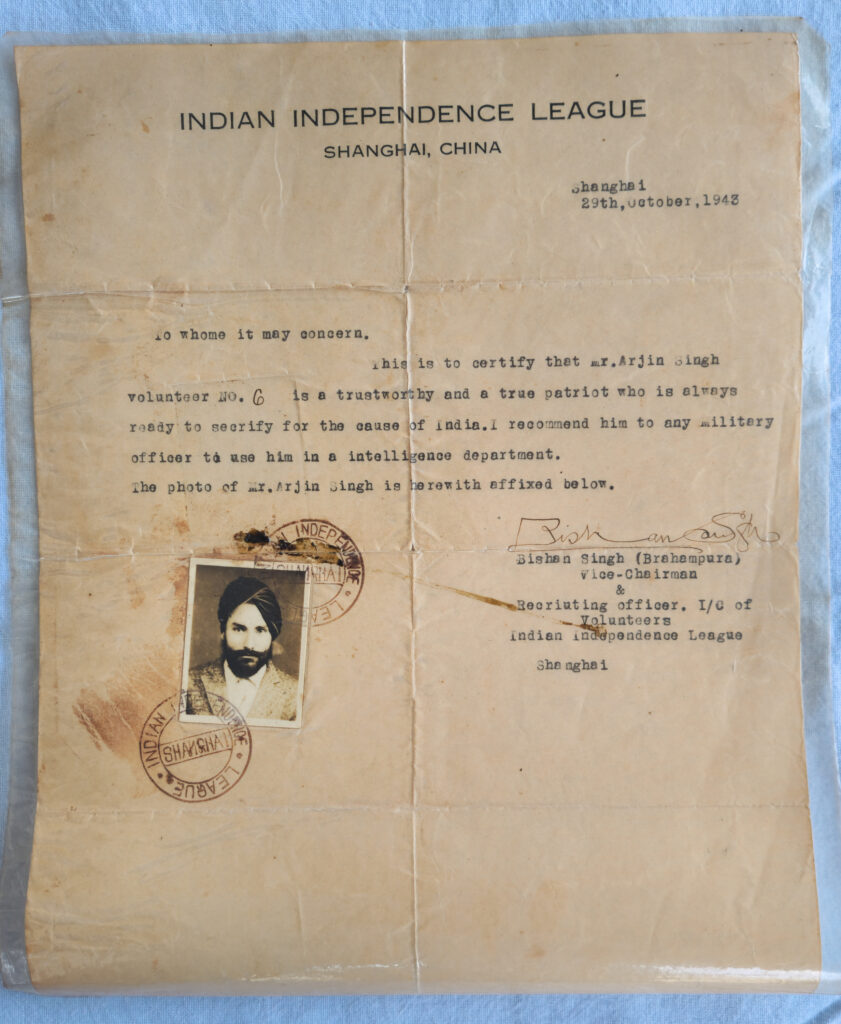
Arjan Singh — Indian Independence League letter, 1943
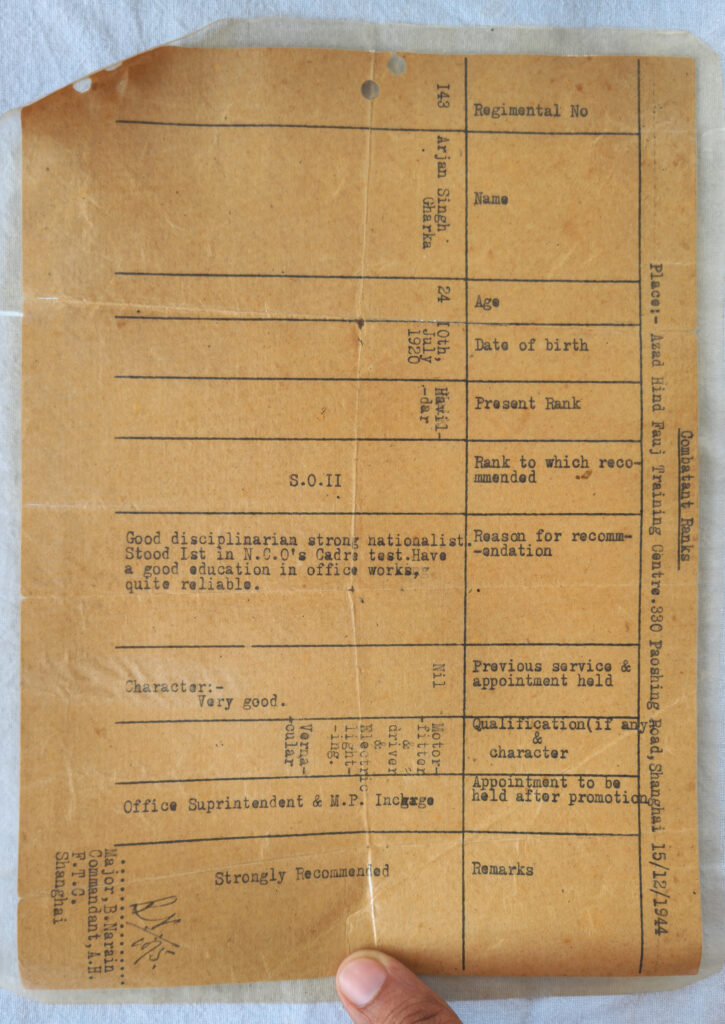
Arjan Singh — promotion recommendation, 1944
INA service record: complete two-page view
INA service record: biographical-page detail
INA service record: promotion-and-conduct detail
Arjan Singh — Azad Hind Fauj testimonial, 1945
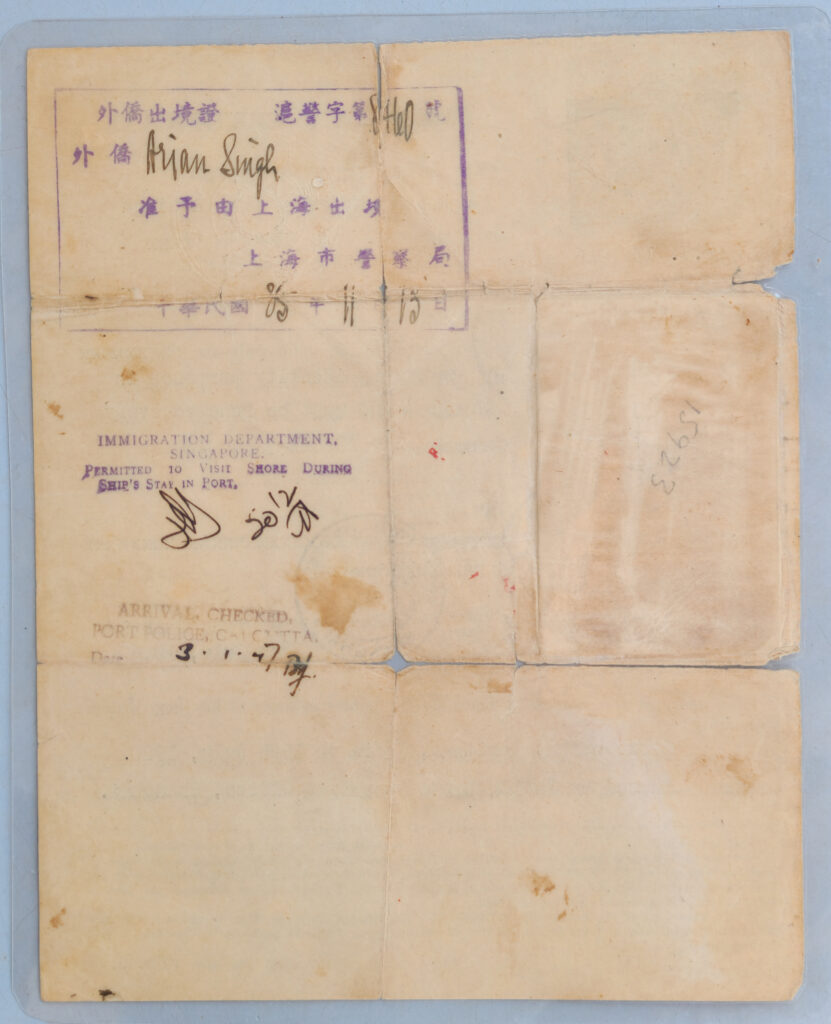
Emergency Certificate: reverse with travel endorsements
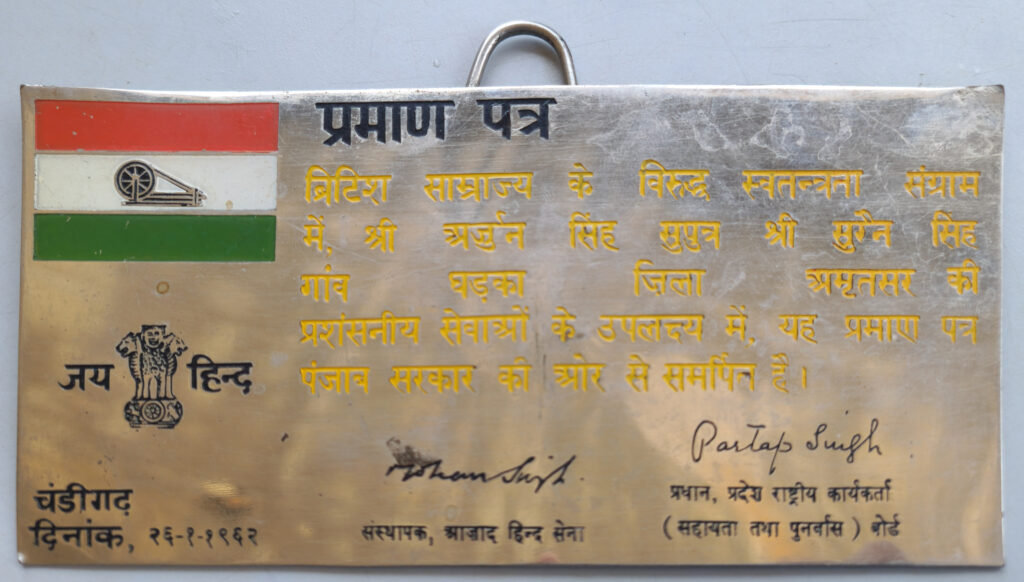
Arjan Singh — Punjab recognition, 1962
Historical group photograph
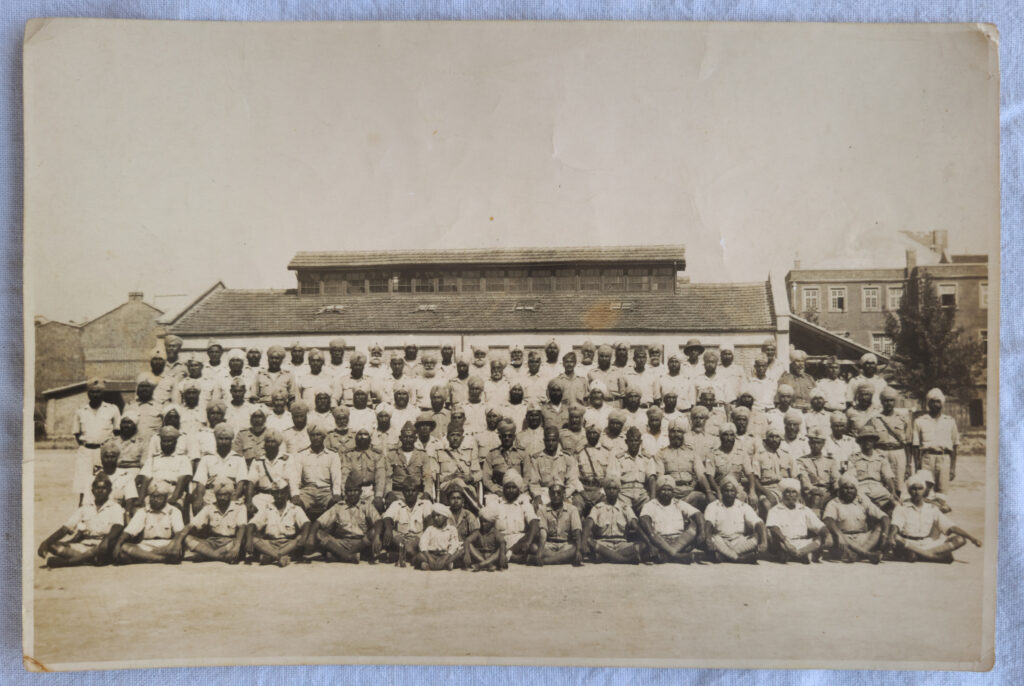
Historical group photograph: possibly Shanghai training centre
Artifacts from the family collection
Medals, insignia, personal effects and measuring tools preserved alongside the family’s papers.
Medals and insignia
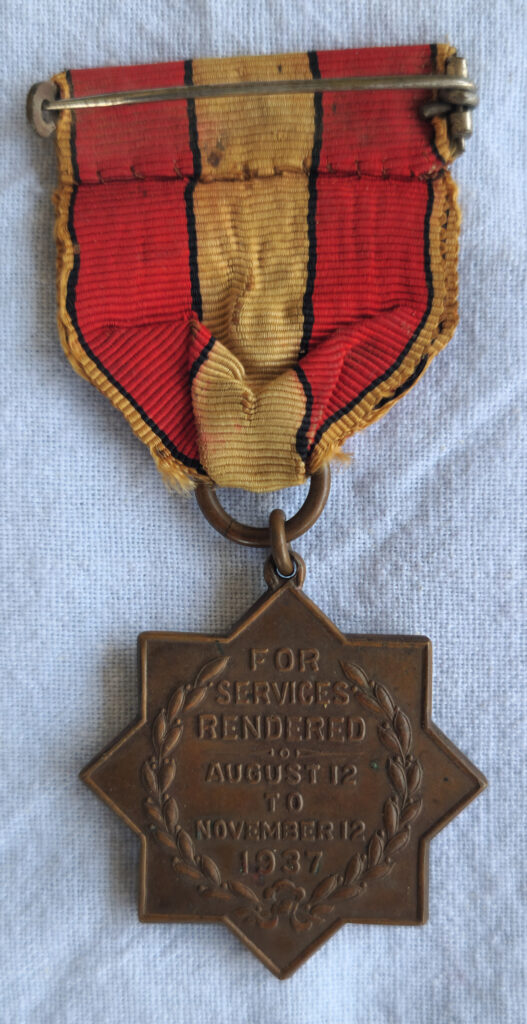
Service medal bearing the dates 12 August–12 November 1937
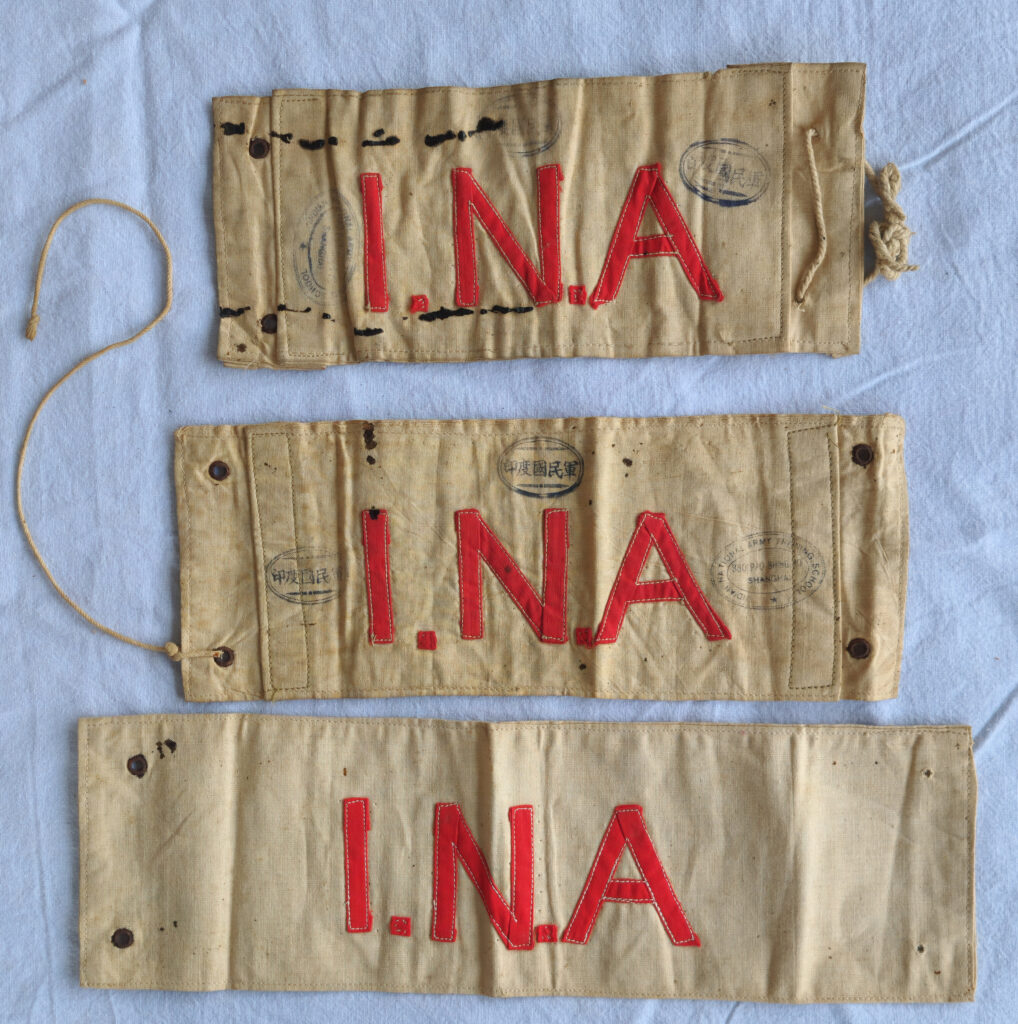
I.N.A. cloth insignia
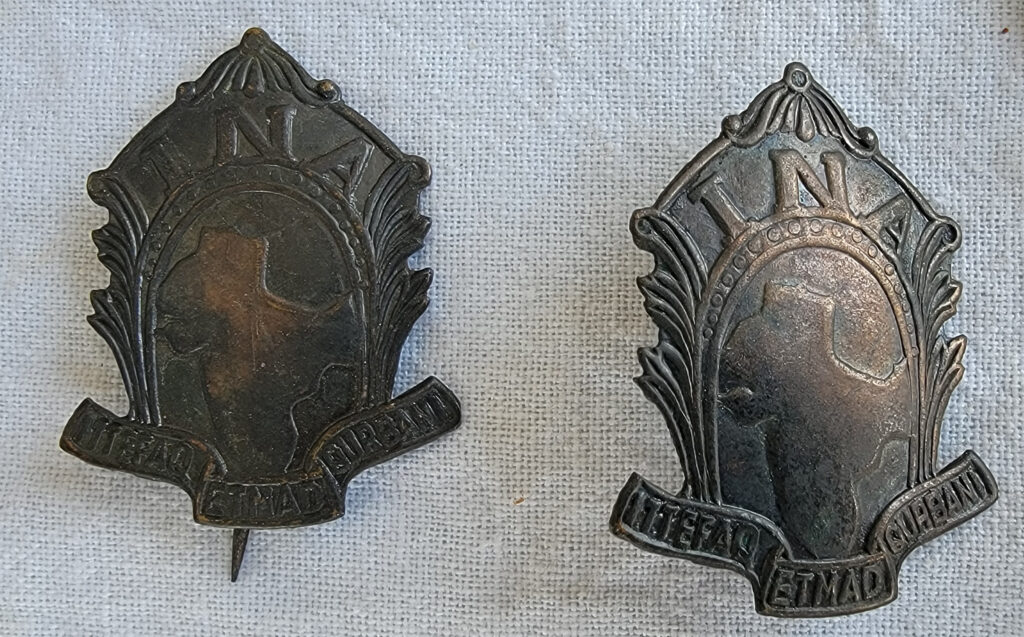
Two I.N.A. metal badges
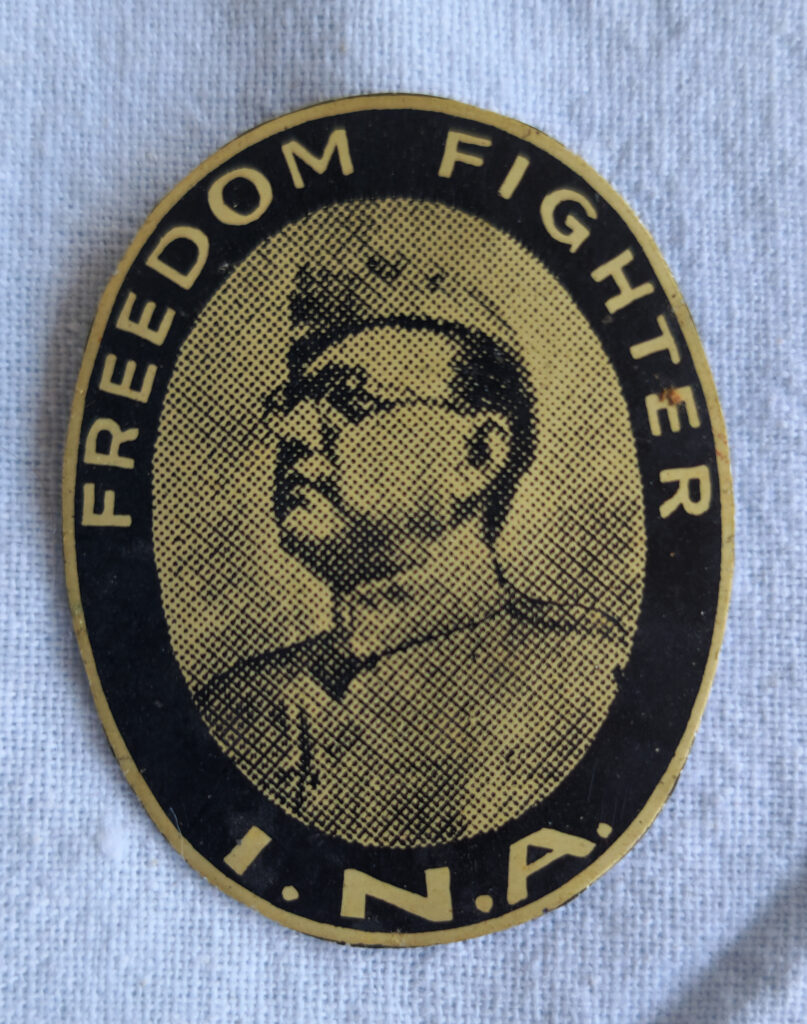
Freedom Fighter I.N.A. portrait badge
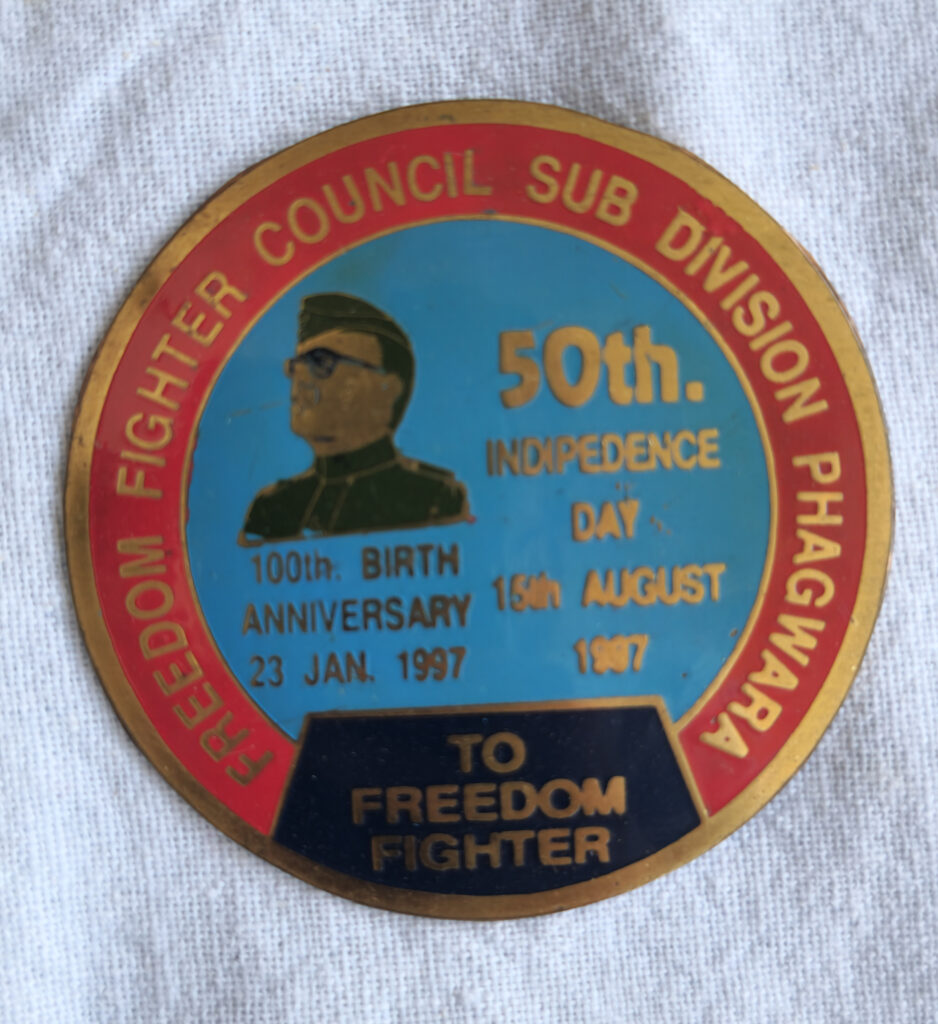
Freedom-fighter commemorative badge, 1997
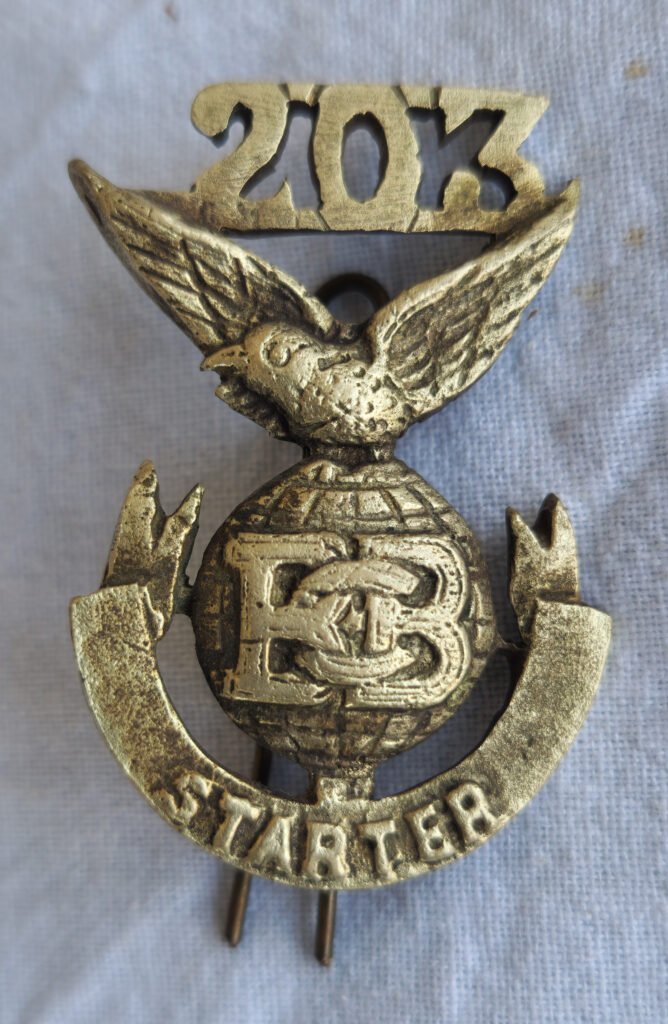
Volunteer insignia bearing 203
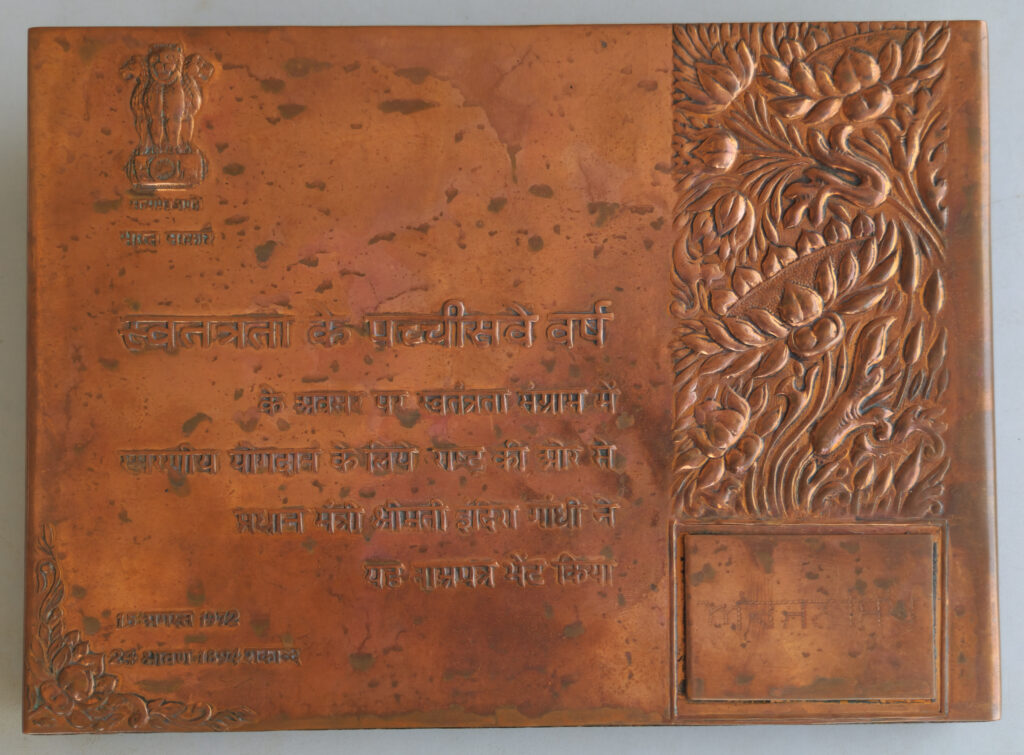
Independence-anniversary tamrapatra, 1972
Shanghai, sporting objects and whistles
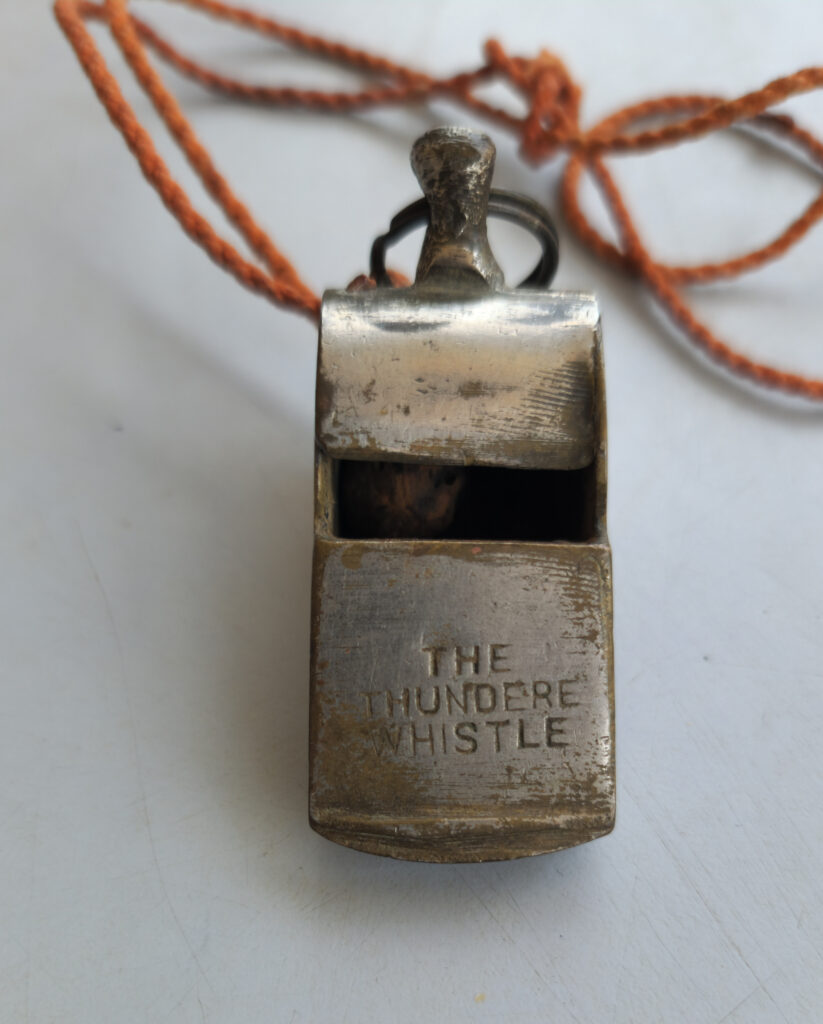
The Thunderer whistle
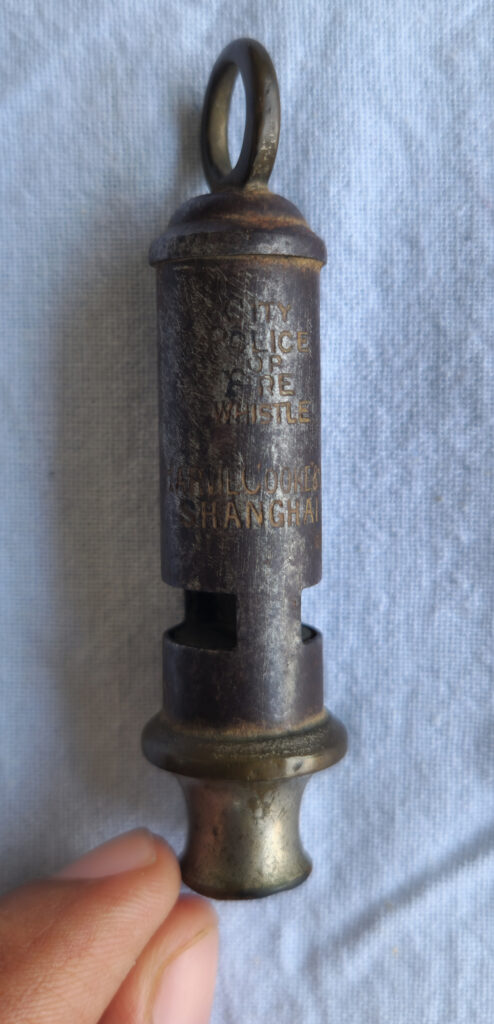
City, police or fire whistle
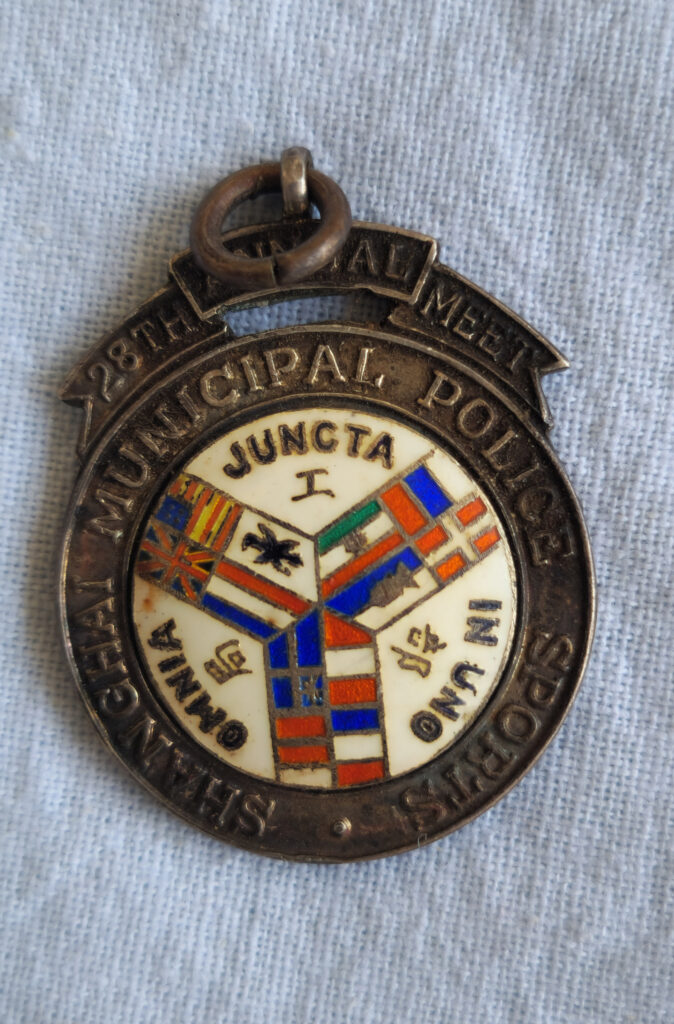
Shanghai Municipal Police sports medal or badge
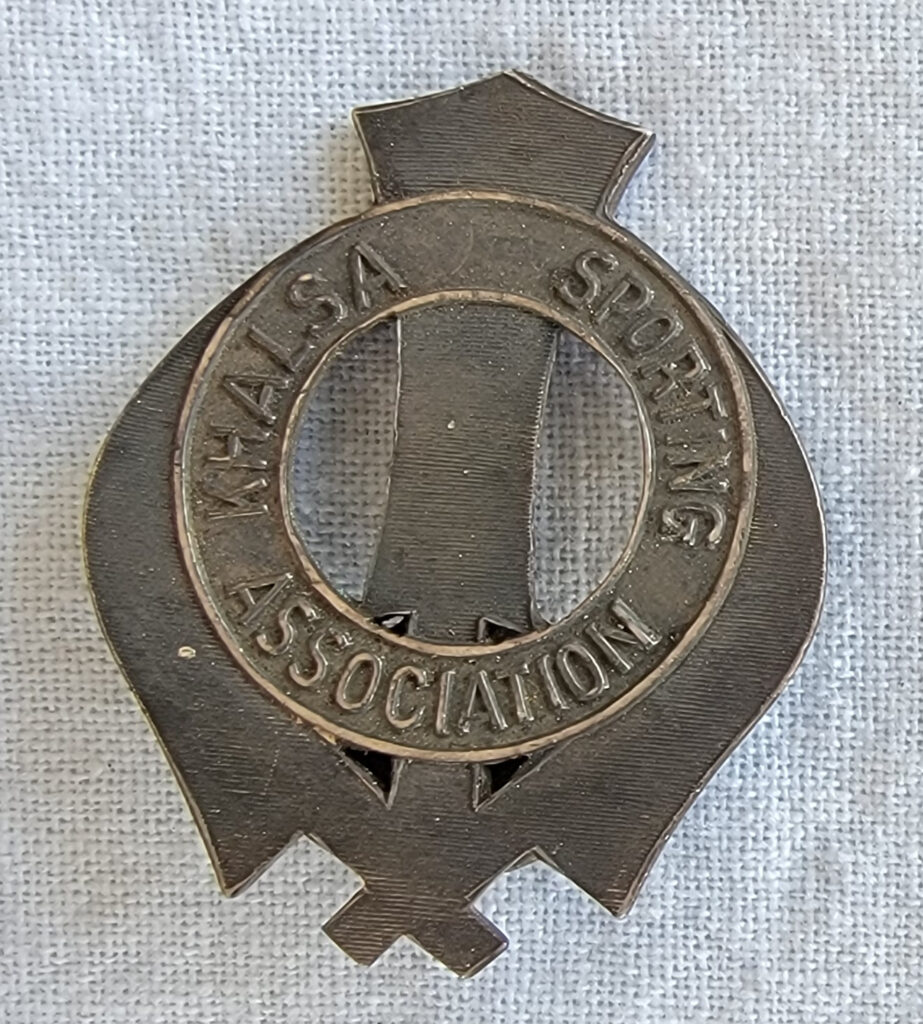
Khalsa Sporting Association badge
Personal effects and measuring tools
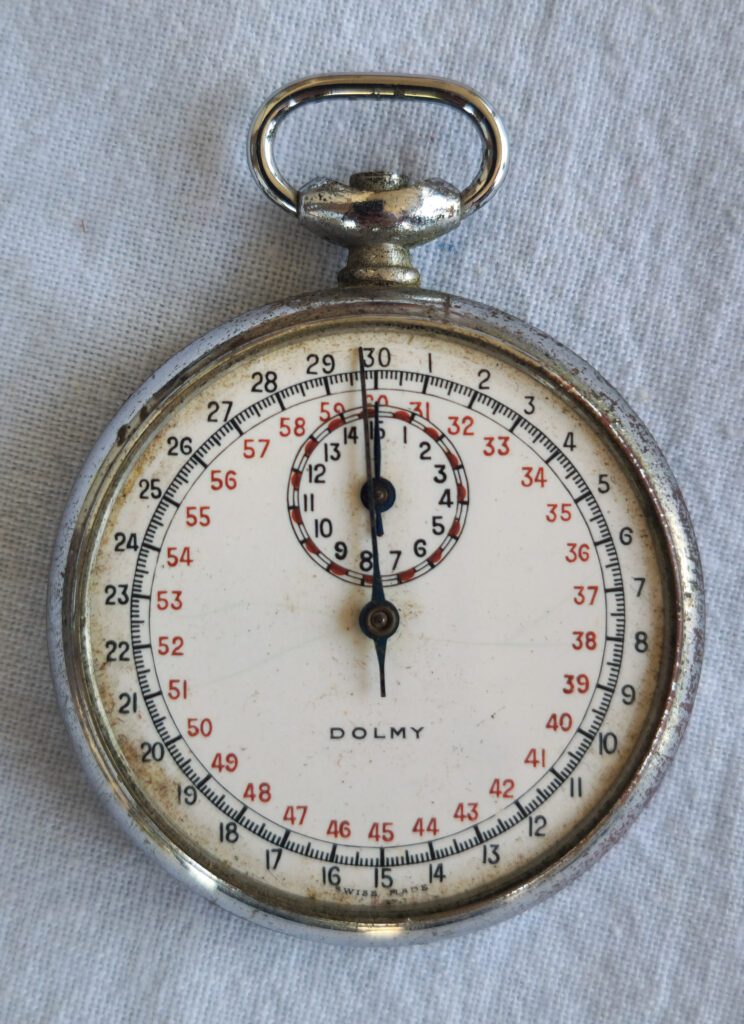
Pocket stopwatch
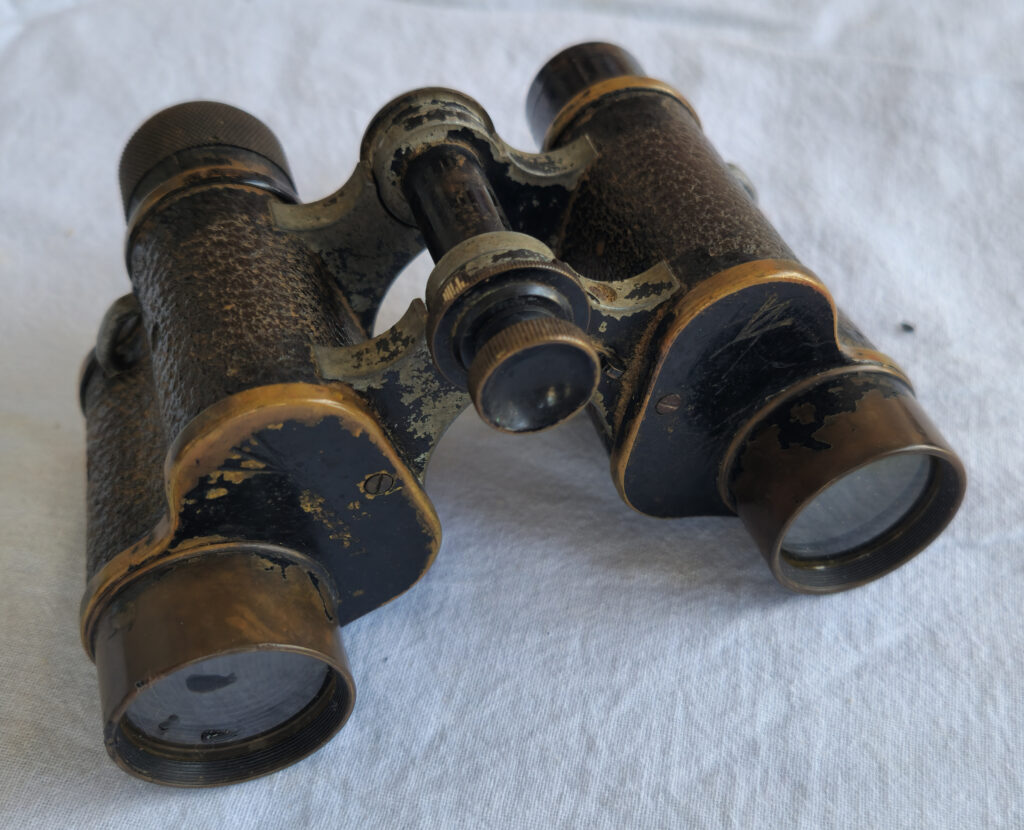
Binoculars

Magnifying glass and loose lens
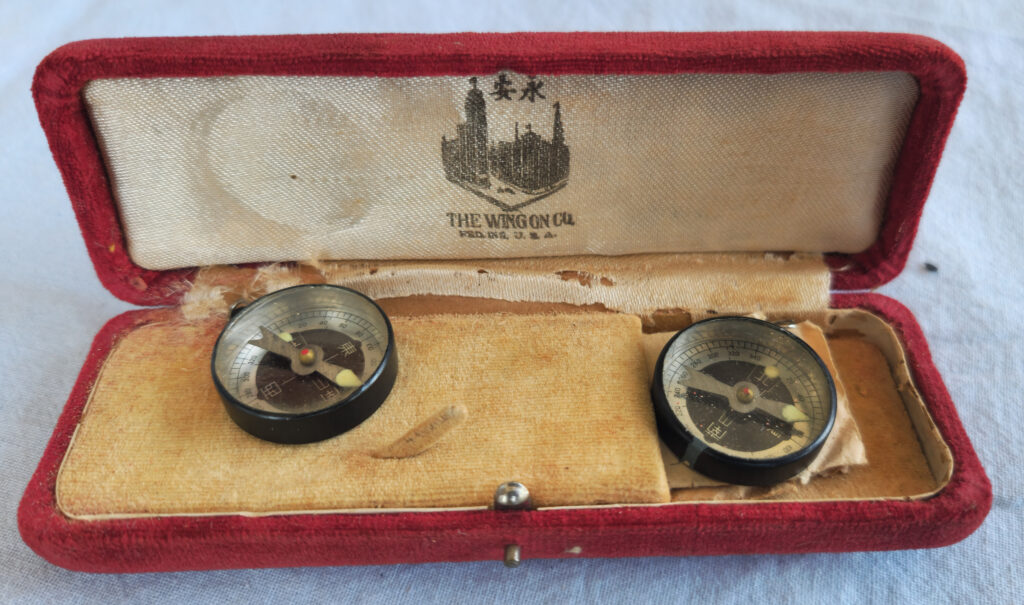
Two small compasses in a Wing On box
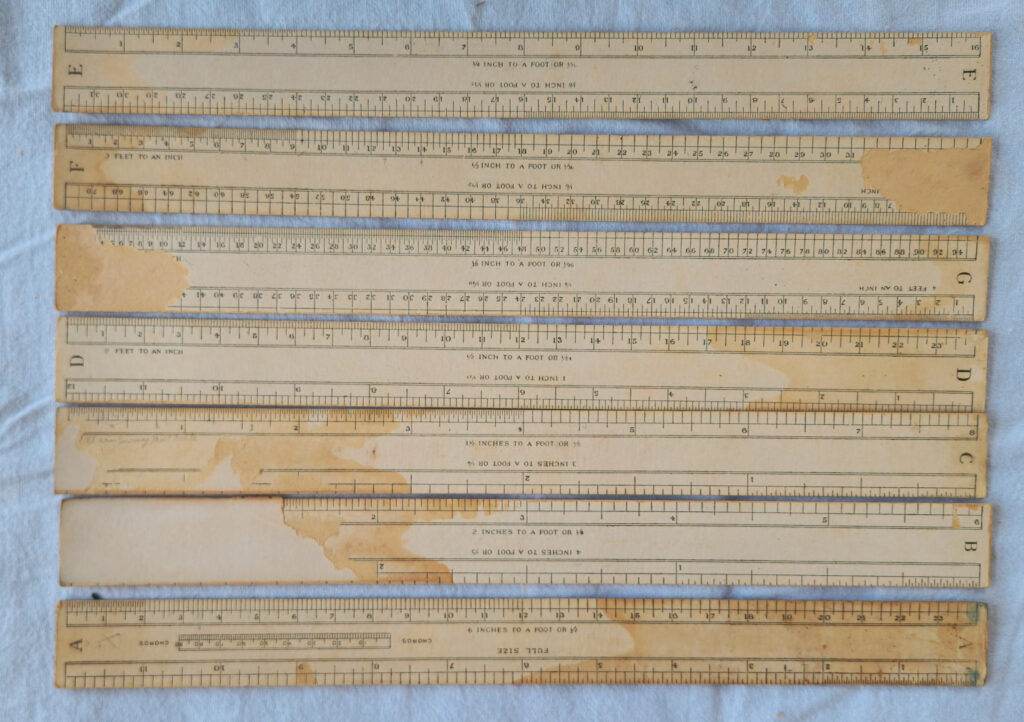
Set of scale rules
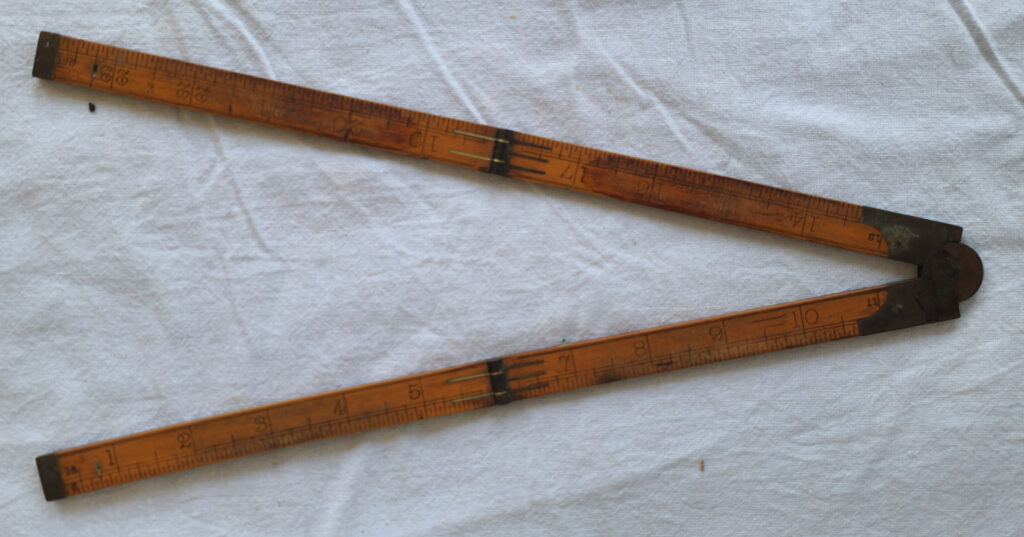
Folding wooden rule
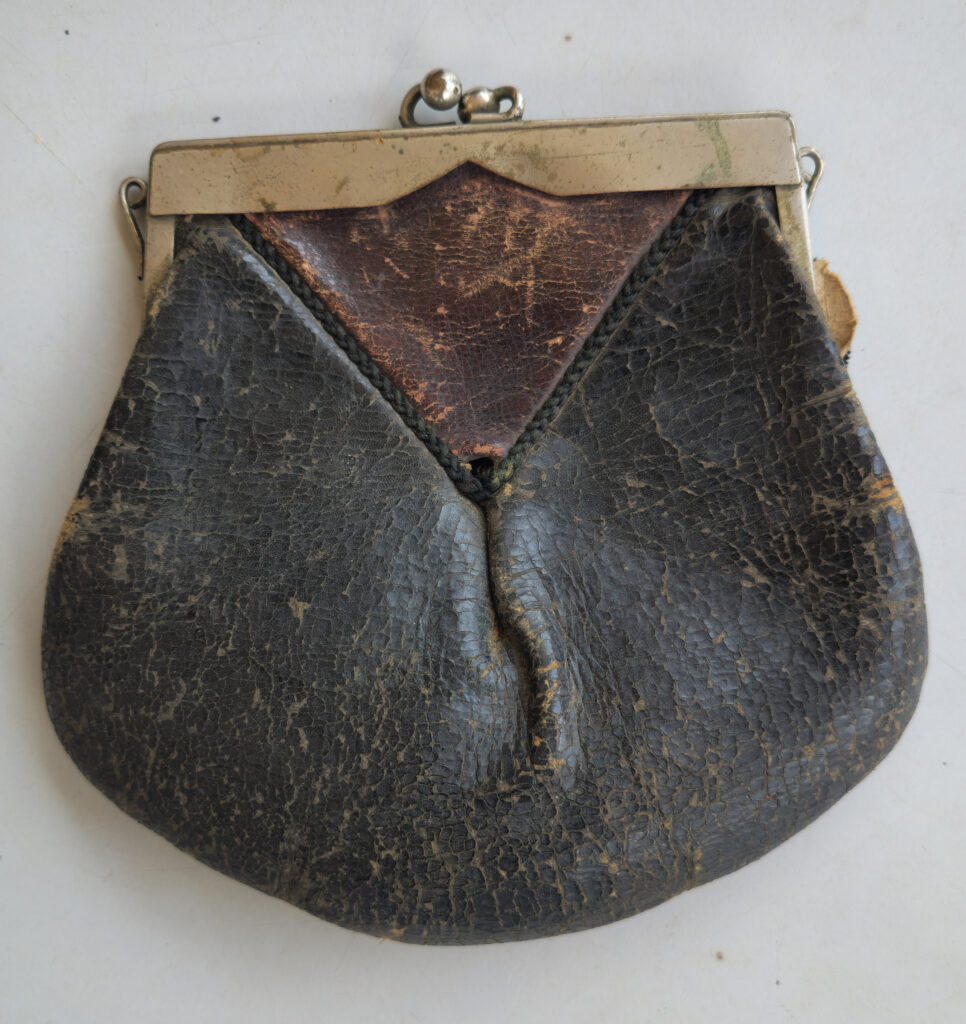
Clasp purse
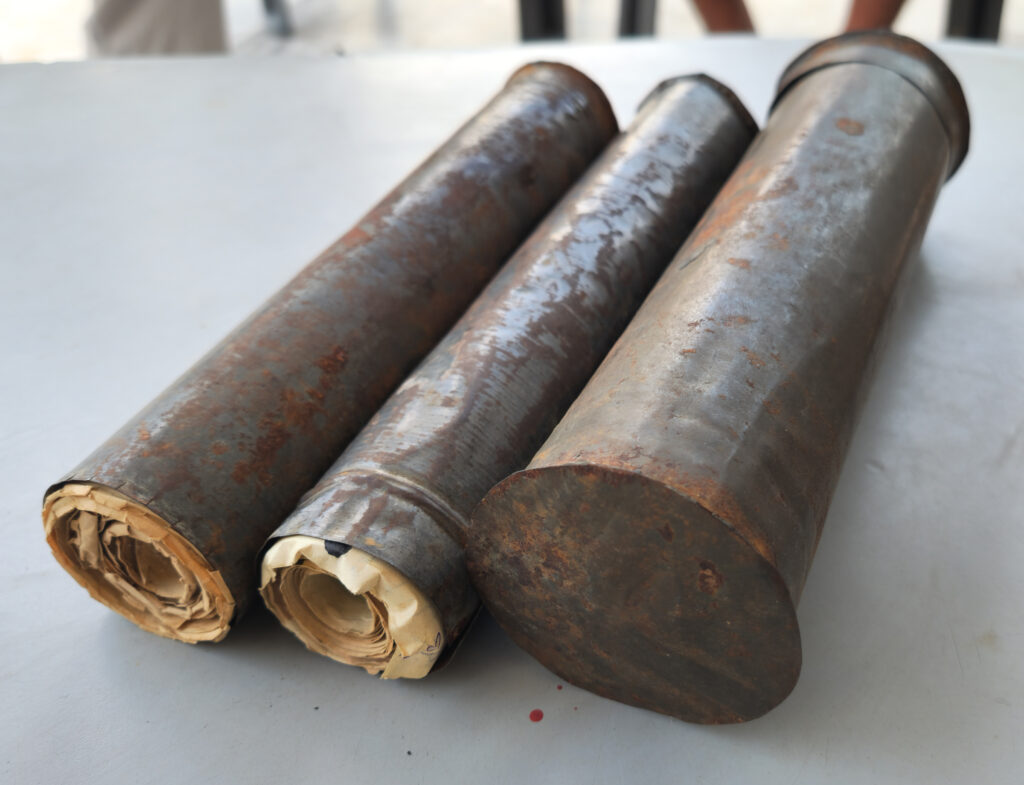
Metal storage tubes

Glass-cutting tool

Unidentified metal implement
Related family interviews
Source notes
Birth and family
Arjan Singh family genealogy, pp. 1–2, names Surain Singh and Gujar Kaur and their four sons. The INA service record and the Emergency Certificate issued in Shanghai on 18 July 1946 support Gharka as his birthplace and 1920 as his birth year. The service record gives 10 July, while the certificate gives 15 July; only the year is used. His father’s name appears as Sorain in the service record and Saran in Dulha Singh’s family-history interview. The page portrait is cropped from the Emergency Certificate. View the complete service record.
Shanghai and the family business
Dulha Singh’s family-history interview, the account of Arjan’s Shanghai career and the question about the family’s first arrival in Shanghai, supplies these recollections. The service record’s departure from India on 29 September 1928 and the family genealogy’s Shanghai arrival in 1935 describe differently dated events that remain unreconciled. See the Dulha Singh and Ajmer Singh interview.
Indian Independence League · 29 October 1943
Indian Independence League recommendation, Shanghai, 29 October 1943, signed by Bishan Singh of Brahampura, Vice-Chairman and Recruiting Officer in charge of volunteers. It identifies Volunteer No. 6 and recommends intelligence work; it does not establish an appointment, mission or combat service. Volunteer No. 6 and regimental No. 143 are distinct categories. View the letter.
Wartime service · 1944–1945
The Azad Hind Fauj promotion recommendation, Shanghai, 15 December 1944, gives Havildar, regimental No. 143 and first place in the N.C.O. cadre test. The commanding officer’s service-card remarks, dated 10 June 1945, say “Promoted S.O.II.”, establishing promotion by that date rather than the exact effective day. The testimonial of 19 August 1945 calls him Sub-Officer and commends his work. Recommendations for office-superintendent duties do not prove an appointment; S.O.II is not equated here with the oral-history designation Naib Subedar. Promotion recommendation · Commanding officer’s remarks · Testimonial.
Return journey · 1946–1947
The Emergency Certificate issued in Shanghai on 18 July 1946 provided temporary identity there; its issue date is not a sailing date. A separate travel-endorsement sheet bearing Arjan’s name records a Shanghai exit endorsement, Singapore shore permission and a Calcutta arrival check on 3 January 1947. The family identifies the sheet as the reverse of the Emergency Certificate; its physical pairing has not been independently established. No ship is identified. View the travel-endorsement reverse. Dulha Singh’s family-history interview places the return after independence; the precise migration sequence and date of resettlement in Punjab remain unresolved.
Sarpanch and village service
Ajit Singh, in the final answer of the written interview with Ajaib Singh and Ajit Singh, supplies 1952. Dulha Singh’s family-history interview supplies the accounts of public grants, impartial land decisions, personally funded boundary stones for Gharka and refusal of tea. Gurmel Singh’s interview, in the discussion of Karmuwala and Gharka’s pattis, recalls eight years of service and consultation on land matters. Eight years does not establish an exact 1952–1960 term. These are oral-history accounts, not independently inspected panchayat records.
Punjab recognition · 26 January 1962
Punjab Government freedom-struggle recognition, Chandigarh, 26 January 1962, naming Arjun Singh, son of Surain Singh of Gharka, Amritsar district. It establishes recognition for the freedom struggle, not a specified wartime decoration or combat action. View the commendation.
Family care and remembrance
Dulha Singh’s family-history interview describes Sucha’s death, Arjan’s subsequent marriage to Balwant Kaur and his raising Sucha’s son as his own. No marriage or adoption date is established; the closing placement of this family account does not date those events after 1962. “Raised as his own” does not establish legal adoption. The concluding remembrance draws on the family and village testimony.
Who’s Who: Punjab Freedom Fighters · 1972
Fauja Singh, chief editor, Who’s Who: Punjab Freedom Fighters, Volume First, Department of Punjab Historical Studies, Punjabi University, Patiala, February 1972, p. 58. The entry identifies Arjan Singh, son of Surain Singh of Ghar ka, Tarn Taran, Amritsar, as an INA volunteer and Sub-Officer. It records one year of training and service until the INA’s fall. It prints 1917 as his birth year, conflicting with the contemporaneous service and travel records’ 1920; the narrative retains 1920. The entry does not establish a Shanghai police career.